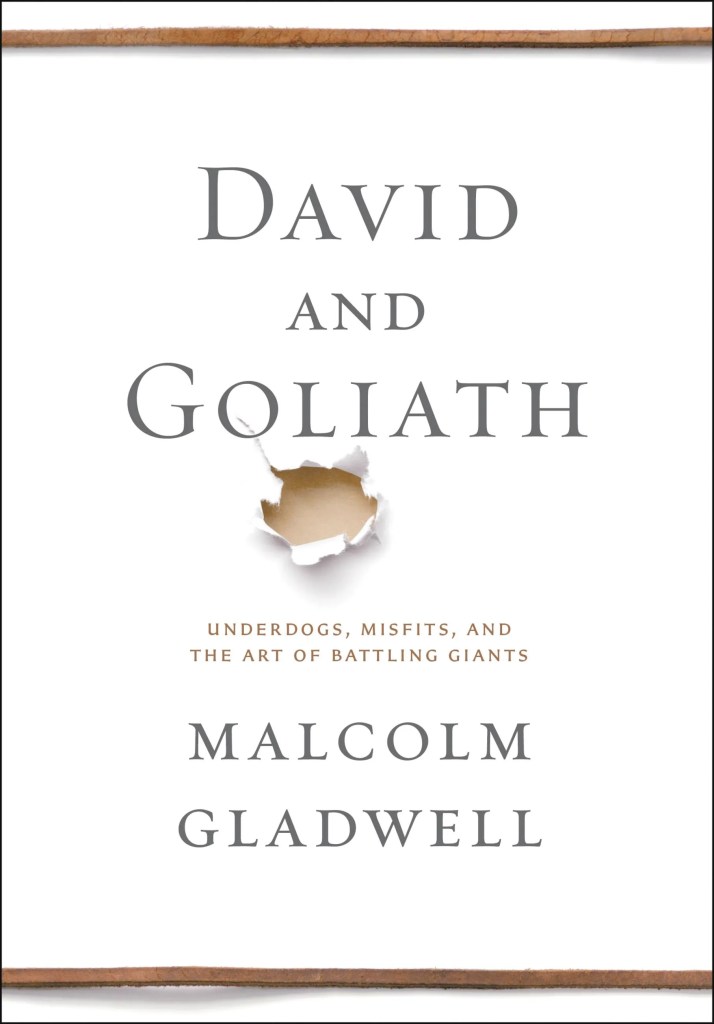
In his thought-provoking book “David and Goliath,” Malcolm Gladwell challenges conventional notions of strength, power, and advantage. Drawing from history, psychology, and sociology, Gladwell explores how underdogs and individuals facing adversity can triumph against all odds. In this blog post, we will delve into the key lessons and insights from “David and Goliath,” accompanied by real-life examples that illustrate the resilience and ingenuity of those who dare to defy expectations.
Background Information about the Author:
Before we embark on our exploration of “David and Goliath,” let’s take a moment to learn about the author, Malcolm Gladwell. A prolific writer and thinker, Gladwell is known for his ability to uncover hidden patterns and insights in complex human phenomena. With bestselling books like “Outliers” and “Blink,” Gladwell has captivated readers worldwide with his unique perspective on success, failure, and the human condition.
Delving into the Lessons with Real-Life Examples:
Lesson 1: The Power of Underdog Mentality:
Gladwell explores how individuals facing adversity often possess a unique mindset that enables them to overcome seemingly insurmountable challenges. He argues that underdogs, far from being disadvantaged, can leverage their resilience, creativity, and determination to achieve extraordinary feats.
Real-Life Example: In the realm of business, entrepreneurs like Sara Blakely, the founder of Spanx, defied conventional wisdom and transformed their setbacks into opportunities. Blakely’s journey from selling fax machines to becoming the world’s youngest self-made female billionaire exemplifies the power of underdog mentality and perseverance.
Lesson 2: The Concept of Desirable Difficulty:
Gladwell introduces the concept of “desirable difficulty,” suggesting that obstacles and setbacks can serve as catalysts for growth and innovation. He argues that adversity, when approached with the right mindset, can foster resilience, creativity, and personal development.
Real-Life Example: The dyslexia of successful entrepreneurs such as Richard Branson and Ingvar Kamprad underscores the notion of desirable difficulty. Despite struggling with reading and writing, these individuals capitalized on their strengths, such as creativity and problem-solving skills, to achieve remarkable success in their respective industries.
Lesson 3: Redefining Strength and Advantage:
Gladwell challenges traditional definitions of strength and advantage, suggesting that what may appear as weaknesses or disadvantages can, in fact, be sources of strength and opportunity. He argues that unconventional approaches and strategies can level the playing field and tilt the odds in favor of the underdog.
Real-Life Example: In the realm of sports, the story of the Jamaican bobsled team defies expectations and illustrates the power of redefining strength and advantage. Despite lacking experience and resources, the team’s unorthodox approach and unwavering determination captured the world’s attention during the 1988 Winter Olympics in Calgary.
Lesson 4: Leveraging Diversity and Adaptability:
Gladwell explores how diversity and adaptability can confer significant advantages in the face of adversity. He suggests that individuals and organizations that embrace diversity of thought, perspective, and experience are better equipped to navigate complex challenges and seize opportunities for innovation and growth.
Real-Life Example: The success of Pixar Animation Studios highlights the importance of leveraging diversity and adaptability in creative endeavors. By fostering an inclusive and collaborative environment, Pixar encourages diverse voices and perspectives, leading to groundbreaking storytelling and cinematic achievements.
Conclusion:
In conclusion, “David and Goliath” by Malcolm Gladwell offers profound insights into the nature of adversity, resilience, and triumph. By examining the stories of underdogs and individuals facing formidable challenges, we gain a deeper understanding of the human capacity for resilience, creativity, and perseverance. As we reflect on the lessons of “David and Goliath,” let us embrace the power of underdog mentality, desirable difficulty, and diversity to overcome obstacles and achieve our fullest potential.
Vocabulary and Expression Note:
- Resilience: (noun)
- Meaning: The ability to recover quickly from difficulties or setbacks.
- Form: Resilient (adjective), Resiliently (adverb)
- Example Sentences:
- “Despite facing numerous challenges, her resilience enabled her to persevere and succeed.”
- “The community demonstrated remarkable resilience in rebuilding after the natural disaster.”
- Ingenuity: (noun)
- Meaning: Cleverness or resourcefulness in solving problems or overcoming obstacles.
- Form: Ingenious (adjective), Ingeniously (adverb)
- Example Sentences:
- “His ingenuity in repurposing old materials helped him create a unique piece of artwork.”
- “The team’s ingenious strategy allowed them to outsmart their opponents and win the game.”
- Catalyst: (noun)
- Meaning: Something that speeds up or triggers a process or event.
- Form: Catalyze (verb)
- Example Sentences:
- “The new technology acted as a catalyst for innovation in the industry.”
- “His inspiring speech served as a catalyst for change within the organization.”
- Perseverance: (noun)
- Meaning: Persistence in the face of difficulties or obstacles; determination.
- Form: Persevere (verb), Perseverant (adjective)
- Example Sentences:
- “Her perseverance in pursuing her dreams eventually paid off.”
- “The team’s perseverant efforts led to the successful completion of the project.”
- Unorthodox: (adjective)
- Meaning: Contrary to what is usual, traditional, or accepted.
- Form: Unorthodoxly (adverb)
- Example Sentences:
- “His unorthodox teaching methods challenged conventional approaches to education.”
- “The company’s unorthodox business model proved to be surprisingly effective.”
- Conventional: (adjective)
- Meaning: Based on or in accordance with what is generally done or believed.
- Form: Conventionally (adverb)
- Example Sentences:
- “She chose to pursue a conventional career path rather than taking risks.”
- “The product was marketed conventionally, following traditional advertising methods.”
- Triumph: (noun)
- Meaning: A great victory or achievement.
- Form: Triumph (verb), Triumphant (adjective), Triumphantly (adverb)
- Example Sentences:
- “Their perseverance resulted in a triumph against all odds.”
- “She smiled triumphantly as she crossed the finish line.”
- Defy: (verb)
- Meaning: To openly resist or refuse to obey; to challenge or oppose.
- Form: Defiance (noun), Defiant (adjective)
- Example Sentences:
- “The activists defied government orders and continued their protests.”
- “Despite the odds, she remained defiant and refused to give up.”
- Conventional Wisdom: (noun phrase)
- Meaning: Accepted beliefs or opinions that are widely held or traditional.
- Example Sentences:
- “Contrary to conventional wisdom, she chose to pursue her passion rather than a stable career.”
- “The company’s success challenged conventional wisdom about how business should be conducted.”
- Obstacle: (noun)
- Meaning: Something that blocks or impedes progress; a barrier or hindrance.
- Form: Obstruct (verb), Obstruction (noun)
- Example Sentences:
- “They encountered numerous obstacles on their journey to success.”
- “Overcoming obstacles requires determination and perseverance.”

- A1 Level (2)
- A2 Level (6)
- AI – Artificial Intelligence (6)
- B1 Level (9)
- B2 Level (2)
- Biographies (16)
- Book Summaries (39)
- Business (2)
- Business English (5)
- C1 Level (1)
- C2 Level (1)
- Character (3)
- Dialogues (3)
- Did you know? (1)
- Emotion (3)
- Expressions in Songs (8)
- Finance (5)
- General Knowledge (2)
- Health (9)
- Health and Fitness (3)
- Holiday (4)
- Ideologies (1)
- Idiomatic Expressions (58)
- Food (3)
- Interesting Stories (1)
- Learning Strategies (1)
- Movie (9)
- Movie Quotes (1)
- Movie Reviews (15)
- Music (18)
- Music Review (7)
- Music Theory (1)
- News (8)
- Parenting (5)
- personal development (1)
- Politics (4)
- Power (19)
- Procrastination (2)
- Quotes (1)
- Relationship (5)
- Respect (3)
- Sexual Violence (2)
- Shopping (13)
- Social Media (8)
- Stories (1)
- Technology (5)
- Travel (10)
- Uncategorized (9)
- Unity (1)
- Vocabulary Enrichment (9)
- War (4)
 Learn With Spring Reader
2 responses to “195. Unveiling the Power of Underdogs: Lessons from “David and Goliath” by Malcolm Gladwell”
Thanks for sharing vocabularies 🤍🍀
LikeLike
thanks LWSR
LikeLike