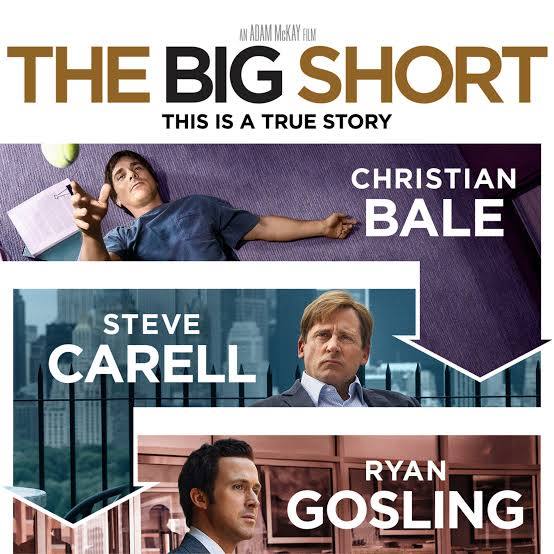
The Big Short : A Riveting Dive into Financial Folly
“Truth is like poetry. And most people f**ing hate poetry.”* — Overheard at a Washington, D.C. bar
Introduction
In the realm of financial dramas, The Big Short stands out as a compelling narrative that dissects the 2008 housing market crash. Directed by Adam McKay and based on Michael Lewis’s book, the film transforms complex financial jargon into an engaging story, blending humor with a sobering critique of systemic greed.
Plot Overview
The film follows a group of savvy investors who foresee the impending collapse of the housing market. Michael Burry (Christian Bale), a hedge fund manager with a keen eye for numbers, identifies the instability in mortgage-backed securities. His unconventional strategy to “short” the housing market sets the stage for a financial upheaval.
Joining the narrative are Jared Vennett (Ryan Gosling), a slick trader who capitalizes on Burry’s insight; Mark Baum (Steve Carell), a skeptical hedge fund manager grappling with personal demons; and the duo of Charlie Geller (John Magaro) and Jamie Shipley (Finn Wittrock), young investors guided by retired banker Ben Rickert (Brad Pitt). Together, they navigate a labyrinth of financial deceit, exposing the fragility of a system built on risky loans and unchecked ambition.
Performance and Direction
Christian Bale delivers a standout performance as Burry, portraying a socially awkward yet brilliant analyst. Steve Carell’s portrayal of Mark Baum adds emotional depth, capturing the moral conflict of profiting from others’ misfortune. Ryan Gosling’s charismatic Vennett serves as both narrator and participant, guiding viewers through the intricacies of financial instruments.
Adam McKay’s direction is innovative, employing fourth-wall breaks and celebrity cameos to demystify complex concepts. Notably, Margot Robbie explains subprime mortgages from a bubble bath, and Anthony Bourdain uses a seafood analogy to elucidate collateralized debt obligations (CDOs). These creative choices inject humor into a grim subject, making the film accessible without diluting its message.
Themes and Life Lessons
At its core, The Big Short is a cautionary tale about the perils of unchecked greed and systemic failure. It underscores the importance of critical thinking and the courage to challenge prevailing narratives. The film also highlights the ethical dilemmas faced by those who, while profiting from the crash, are acutely aware of its devastating impact on ordinary lives.
“The truth is like poetry. And most people f**ing hate poetry.”* — This recurring line encapsulates the film’s central theme: the discomfort of confronting harsh realities.
Visual and Technical Aspects
The film’s visual style is dynamic, with rapid editing and a documentary-like aesthetic that mirrors the chaos of the financial world. Cinematographer Barry Ackroyd employs handheld camera work to create an immersive experience, while editor Hank Corwin’s brisk pacing maintains narrative momentum.
Conclusion
The Big Short succeeds in transforming a complex financial crisis into a compelling narrative that is both informative and entertaining. Through stellar performances and inventive storytelling, the film offers a sobering reflection on the consequences of systemic greed and the importance of vigilance in the face of institutional failure.
Vocabulary and Expression Notes
- Foresee – to predict or anticipate something before it happens.
- She could foresee the challenges ahead and prepared accordingly.
- Economists failed to foresee the magnitude of the crisis.
- Unconventional – not based on or conforming to what is generally done or believed.
- His unconventional methods yielded surprising results.
- The artist’s unconventional style attracted attention.
- Navigate – to find one’s way through a complex system or situation.
- They had to navigate the legal system to resolve the issue.
- She navigated her career through various industries.
- Charismatic – exercising a compelling charm that inspires devotion in others.
- The charismatic leader rallied the crowd.
- His charismatic personality made him popular among peers.
- Demystify – to make a difficult or esoteric subject clearer and easier to understand.
- The teacher aimed to demystify complex theories.
- The guide demystified the process for newcomers.
- Cautionary tale – a story that warns of a danger.
- The film serves as a cautionary tale about excess.
- History offers cautionary tales for future generations.
- Unchecked – not restrained or controlled.
- Unchecked growth can lead to problems.
- The unchecked spread of misinformation is concerning.
- Ethical dilemma – a situation in which a difficult choice has to be made between two morally acceptable options.
- Doctors often face ethical dilemmas in their practice.
- The character’s ethical dilemma added depth to the story.
- Dynamic – characterized by constant change, activity, or progress.
- The dynamic environment required adaptability.
- Their dynamic partnership led to success.
- Immersive – providing a completely engaging or absorbing experience.
- The game offers an immersive experience.
- The exhibition was immersive and interactive.
- Vigilance – the action or state of keeping careful watch for possible danger or difficulties.
- Constant vigilance is necessary in this job.
- The community maintained vigilance during the storm.
- Institutional failure – a breakdown in the operation or integrity of an organization or system.
- The crisis highlighted institutional failures.
- Addressing institutional failure requires reform.
- Stellar – exceptionally good; outstanding.
- She gave a stellar performance.
- The team had a stellar season.
- Innovative – featuring new methods; advanced and original.
- The company is known for its innovative designs.
- Innovative thinking led to the breakthrough.
- Accessible – easy to approach, reach, or understand.
- The book is accessible to a wide audience.
- They made the information accessible to all.
Remember, exploring films like The Big Short not only enhances your understanding of cinematic storytelling but also enriches your vocabulary and comprehension skills. Keep watching and learning!
236. The Great Flood: When Survival Is No Longer Enough
The Great Flood is a thought-provoking film set in a climate-collapsed future, emphasizing the long-term consequences of inaction rather than sudden disasters. It explores themes of survival, fragile safety, and moral dilemmas faced by characters under pressure, ultimately prompting viewers to confront their responsibilities towards environmental issues and the true meaning of survival.
Keep reading
235. BUSINESS ENGLISH SERIES #5 – 5 Essential Expressions for Professional Emails and Follow-Ups
The post highlights five essential expressions for crafting professional emails. These phrases—”I’m reaching out to,” “Just following up on,” “Please let me know if,” “As discussed,” and “Looking forward to”—enhance clarity, politeness, and professionalism. Mastering them improves communication in the workplace, fostering better relationships and opportunities.
Keep reading
234. BUSINESS ENGLISH SERIES #4 – 5 Essential Expressions for Meetings and Professional Discussions
🧩 BUSINESS ENGLISH SERIES #4 5 Essential Expressions for Meetings and Professional Discussions Meetings are where decisions are made, ideas are evaluated, and leadership is noticed.Many professionals understand English well, but during meetings they hesitate, stay silent, or use language that sounds unclear or too casual. The problem is not intelligence or experience — it…
Keep reading
- A1 Level (2)
- A2 Level (6)
- AI – Artificial Intelligence (6)
- B1 Level (9)
- B2 Level (2)
- Biographies (16)
- Book Summaries (39)
- Business (2)
- Business English (5)
- C1 Level (1)
- C2 Level (1)
- Character (3)
- Dialogues (3)
- Did you know? (1)
- Emotion (3)
- Expressions in Songs (8)
- Finance (5)
- General Knowledge (2)
- Health (9)
- Health and Fitness (3)
- Holiday (4)
- Ideologies (1)
- Idiomatic Expressions (58)
- Food (3)
- Interesting Stories (1)
- Learning Strategies (1)
- Movie (9)
- Movie Quotes (1)
- Movie Reviews (15)
- Music (18)
- Music Review (7)
- Music Theory (1)
- News (8)
- Parenting (5)
- personal development (1)
- Politics (4)
- Power (19)
- Procrastination (2)
- Quotes (1)
- Relationship (5)
- Respect (3)
- Sexual Violence (2)
- Shopping (13)
- Social Media (8)
- Stories (1)
- Technology (5)
- Travel (10)
- Uncategorized (9)
- Unity (1)
- Vocabulary Enrichment (9)
- War (4)
 Learn With Spring Reader
3 responses to “225. The Big Short : A Riveting Dive into Financial Folly”
Stellar. after reading this. i got an idea my baby name. I will name her Stellar. 😍
LikeLike
Thanks LWSR
LikeLike
Thanks LWSR
LikeLike