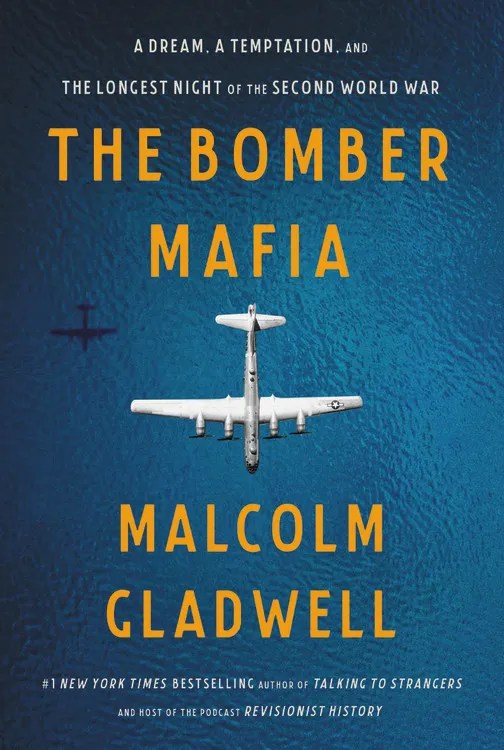
In “The Bomber Mafia,” Malcolm Gladwell offers a captivating narrative that delves into the complexities of decision-making, strategy, and morality during World War II. Through the lens of the bomber commanders and innovators of the era, Gladwell explores the challenges and consequences of pursuing a vision of precision bombing. In this blog post, we will dissect the key lessons and insights from “The Bomber Mafia,” examining how they resonate with contemporary issues and decision-making processes.
Background Information about the Author:
Before we delve into the lessons of “The Bomber Mafia,” let’s briefly discuss the author, Malcolm Gladwell. Renowned for his ability to blend storytelling with insightful analysis, Gladwell is a bestselling author known for works such as “Outliers” and “Blink.” With a knack for uncovering hidden patterns and drawing connections across disciplines, Gladwell’s work transcends conventional boundaries, offering readers new perspectives on familiar topics.
Delving into the Lessons with Real-Life Examples:
Lesson 1: The Pursuit of Precision:
Gladwell explores the relentless pursuit of precision bombing by a group of visionary commanders known as the Bomber Mafia. Their belief in the power of technology and precision led them to advocate for bombing strategies aimed at minimizing collateral damage and maximizing impact on enemy targets.
Real-Life Example: The case of the bombing of Tokyo by General Curtis LeMay illustrates the challenges and consequences of precision bombing. Despite the Bomber Mafia’s vision of surgical strikes, the firebombing of Tokyo resulted in widespread destruction and civilian casualties, prompting ethical and strategic debates about the morality of such tactics.
Lesson 2: The Fog of War:
Gladwell examines the concept of the “fog of war,” highlighting the uncertainty and ambiguity that commanders face in the heat of battle. Despite meticulous planning and advanced technology, unforeseen variables and human error can disrupt even the most carefully crafted strategies, leading to unintended consequences and moral dilemmas.
Real-Life Example: The story of the bombing of Dresden underscores the unpredictability of warfare and the fog of war. Despite the Bomber Mafia’s intentions to target military infrastructure, the bombing of Dresden resulted in the deaths of thousands of civilians, raising questions about the ethics of aerial bombardment and the unintended consequences of strategic decisions.
Lesson 3: Moral Quandaries and Ethical Decision-Making:
Gladwell grapples with the moral complexities of wartime decision-making, exploring the tension between military necessity and ethical considerations. He challenges readers to confront difficult questions about the morality of targeting civilians, weighing the potential benefits of strategic objectives against the human cost of warfare.
Real-Life Example: The bombing of Hiroshima and Nagasaki serves as a stark example of the moral dilemmas inherent in warfare. While the atomic bombings hastened the end of World War II, they also caused unprecedented destruction and loss of civilian lives, forcing leaders to confront the ethical implications of their actions.
Lesson 4: Lessons for the Future:
Gladwell concludes by reflecting on the enduring lessons of the Bomber Mafia and their legacy in modern warfare. He emphasizes the importance of learning from history, understanding the complexities of strategic decision-making, and grappling with the ethical implications of military action in an increasingly interconnected world.
Conclusion:
In conclusion, “The Bomber Mafia” by Malcolm Gladwell offers a thought-provoking exploration of the challenges and consequences of strategic decision-making during World War II. Through gripping narratives and insightful analysis, Gladwell sheds light on the complexities of war, morality, and human nature. As we reflect on the lessons of the Bomber Mafia, let us heed the warnings of history and strive for greater wisdom, empathy, and ethical clarity in our pursuit of peace and security in the modern world.
Vocabulary and Expression Note:
- Consequences: (noun)
- Meaning: The results or effects of an action or decision.
- Form: None
- Example Sentences:
- “She had to face the consequences of her actions.”
- “The consequences of climate change are becoming increasingly severe.”
- Visionary: (adjective)
- Meaning: Having or showing a clear and imaginative perception of what could be achieved in the future.
- Form: Vision (noun)
- Example Sentences:
- “Steve Jobs was a visionary leader who transformed the technology industry.”
- “The architect had a visionary design for the new building.”
- Collateral Damage: (noun phrase)
- Meaning: Unintended or incidental damage to civilians and their property during military operations.
- Form: None
- Example Sentences:
- “The bombing resulted in significant collateral damage to nearby buildings.”
- “Military commanders must weigh the risk of collateral damage when planning airstrikes.”
- Ethical: (adjective)
- Meaning: Relating to principles of right and wrong behavior.
- Form: Ethic (noun)
- Example Sentences:
- “The company’s decision to prioritize profit over safety raised ethical concerns.”
- “She faced an ethical dilemma when asked to compromise her values.”
- Meticulous: (adjective)
- Meaning: Showing great attention to detail; very careful and precise.
- Form: Meticulously (adverb)
- Example Sentences:
- “The artist’s paintings were created with meticulous attention to detail.”
- “She meticulously planned every aspect of the event.”
- Ambiguity: (noun)
- Meaning: The quality of being open to more than one interpretation; uncertainty or inexactness.
- Form: Ambiguous (adjective)
- Example Sentences:
- “The instructions were vague and full of ambiguity.”
- “The results of the experiment were ambiguous, requiring further analysis.”
- Unforeseen: (adjective)
- Meaning: Not anticipated or predicted.
- Form: Foresee (verb)
- Example Sentences:
- “The sudden storm caused unforeseen delays in the construction project.”
- “Despite their best efforts, unforeseen obstacles arose.”
- Morality: (noun)
- Meaning: Principles concerning the distinction between right and wrong or good and bad behavior.
- Form: Moral (adjective)
- Example Sentences:
- “Religion often plays a role in shaping people’s morality.”
- “The decision raised questions about the moral implications of the company’s actions.”
- Legacy: (noun)
- Meaning: Something handed down from an ancestor or predecessor.
- Form: None
- Example Sentences:
- “The artist left behind a rich legacy of paintings and sculptures.”
- “The team’s victory was part of their coach’s legacy.”
- Enduring: (adjective)
- Meaning: Lasting over a long period of time; enduring.
- Form: Endurance (noun), Endure (verb)
- Example Sentences:
- “Their enduring friendship lasted a lifetime.”
- “The castle’s enduring walls stood strong against the test of time.”

- A1 Level (2)
- A2 Level (6)
- AI – Artificial Intelligence (6)
- B1 Level (9)
- B2 Level (2)
- Biographies (16)
- Book Summaries (39)
- Business (2)
- Business English (5)
- C1 Level (1)
- C2 Level (1)
- Character (3)
- Dialogues (3)
- Did you know? (1)
- Emotion (3)
- Expressions in Songs (8)
- Finance (5)
- General Knowledge (2)
- Health (9)
- Health and Fitness (3)
- Holiday (4)
- Ideologies (1)
- Idiomatic Expressions (58)
- Food (3)
- Interesting Stories (1)
- Learning Strategies (1)
- Movie (9)
- Movie Quotes (1)
- Movie Reviews (15)
- Music (18)
- Music Review (7)
- Music Theory (1)
- News (8)
- Parenting (5)
- personal development (1)
- Politics (4)
- Power (19)
- Procrastination (2)
- Quotes (1)
- Relationship (5)
- Respect (3)
- Sexual Violence (2)
- Shopping (13)
- Social Media (8)
- Stories (1)
- Technology (5)
- Travel (10)
- Uncategorized (9)
- Unity (1)
- Vocabulary Enrichment (9)
- War (4)
 Learn With Spring Reader
One response to “197. Decoding Strategy and Consequences: Exploring “The Bomber Mafia” by Malcolm Gladwell”
thanks for ethics during bombing with airstrike
LikeLike