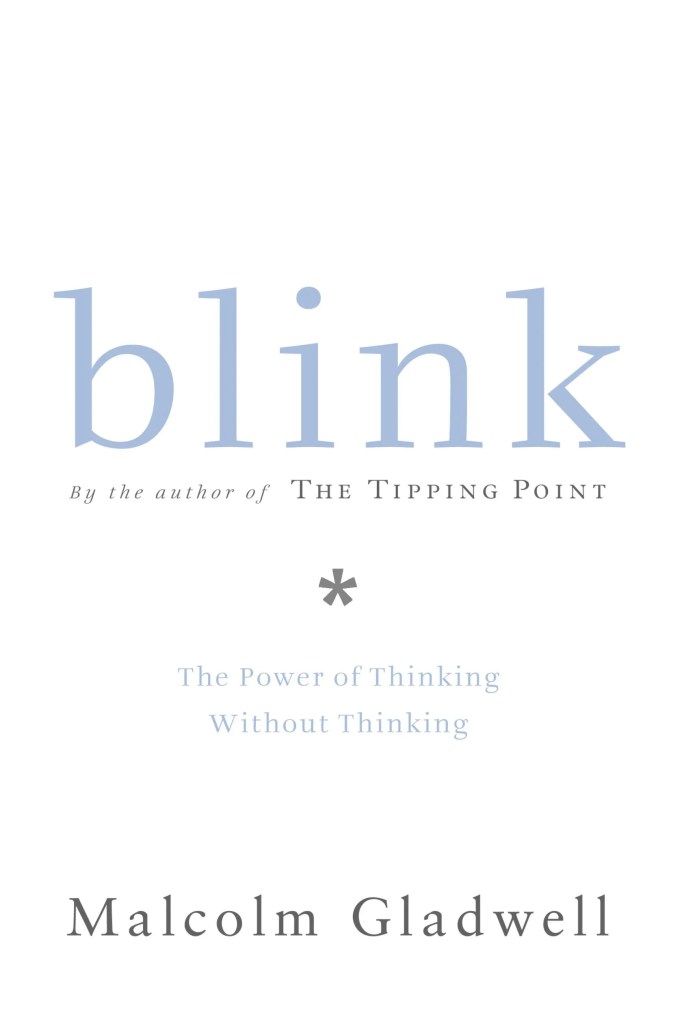
In his groundbreaking book “Blink,” Malcolm Gladwell explores the power of intuition and rapid decision-making, challenging the notion that snap judgments are always unreliable. Through captivating anecdotes and thought-provoking research, Gladwell reveals how our subconscious mind processes information in the blink of an eye, often leading to accurate assessments and insights. In this blog post, we will delve into the key lessons and insights from “Blink,” accompanied by real-life examples that illustrate the remarkable capabilities of our intuition.
Background Information about the Author:
Before we dive into the lessons of “Blink,” let’s take a moment to learn about the author, Malcolm Gladwell. Gladwell is a renowned author, journalist, and speaker, known for his thought-provoking explorations of human behavior and social dynamics. With bestsellers like “The Tipping Point” and “Outliers,” Gladwell has earned acclaim for his ability to uncover fascinating insights hidden beneath the surface of everyday phenomena.
Delving into the Lessons with Real-Life Examples:
Lesson 1: The Power of Thin-Slicing:
Gladwell introduces the concept of “thin-slicing,” which refers to the ability to make rapid judgments or decisions based on limited information. He argues that our subconscious mind is adept at processing subtle cues and patterns, allowing us to form accurate impressions in the blink of an eye.
Real-Life Example: In the world of art authentication, experts often rely on thin-slicing to distinguish between authentic masterpieces and clever forgeries. In one case, a statue known as the Getty Kouros was deemed authentic by art historians in a matter of seconds, based on their intuitive sense of its age, style, and craftsmanship.
Lesson 2: The Influence of Priming:
Gladwell explores how priming, or subtle cues in our environment, can influence our thoughts, feelings, and behavior without our conscious awareness. He demonstrates how simple prompts or associations can shape our perceptions and decisions in unexpected ways.
Real-Life Example: In a groundbreaking study on priming conducted by psychologist John Bargh, participants who were exposed to words associated with elderly stereotypes (such as “Florida,” “wrinkle,” and “bingo”) subsequently walked more slowly down a hallway compared to those exposed to neutral words. This experiment illustrates how priming can unconsciously influence our behavior.
Lesson 3: Rapid Cognition and Snap Judgments:
Gladwell examines the benefits and pitfalls of rapid cognition, or the ability to make split-second decisions based on instinct and intuition. He argues that while snap judgments can often yield accurate results, they can also be influenced by biases and prejudices that lurk beneath the surface of our consciousness.
Real-Life Example: In the case of the shooting of Amadou Diallo, an unarmed black man who was mistaken for a suspect by New York City police officers, Gladwell illustrates how rapid cognition can lead to tragic consequences. The officers’ snap judgments were influenced by implicit biases and stereotypes, resulting in a fatal misunderstanding.
Lesson 4: Harnessing the Power of Intuition:
Gladwell discusses strategies for harnessing the power of intuition and improving our decision-making skills. He suggests that by cultivating self-awareness, embracing diversity of thought, and honing our emotional intelligence, we can make more informed and empathetic judgments.
Real-Life Example: In the world of professional tennis, elite players like Roger Federer and Serena Williams are renowned for their ability to anticipate their opponents’ moves and react with lightning-fast reflexes. Their intuitive understanding of the game, honed through years of practice and experience, allows them to make split-second decisions under pressure.
Conclusion:
In conclusion, “Blink” by Malcolm Gladwell offers profound insights into the mysteries of human intuition and rapid cognition. By understanding the principles of thin-slicing, priming, and snap judgments, we can unlock the hidden potential of our subconscious mind and make better decisions in our personal and professional lives. As we reflect on the lessons of “Blink,” let us embrace the power of intuition, cultivate self-awareness, and approach decision-making with curiosity and humility.
Vocabulary and expression note:
- Intuition: (noun)
- Meaning: The ability to understand or know something without conscious reasoning; a gut feeling.
- Form: Intuitive (adjective), Intuitively (adverb)
- Example Sentences:
- “She had a strong intuition that something was wrong.”
- “Trusting your intuition can lead to unexpected insights.”
- Rapid: (adjective)
- Meaning: Happening quickly or in a short amount of time.
- Form: Rapidly (adverb)
- Example Sentences:
- “The company experienced rapid growth in its first year of operation.”
- “He responded to the emergency situation with rapid action.”
- Judgment: (noun)
- Meaning: An opinion or decision formed after careful consideration or evaluation.
- Form: Judge (verb), Judgmental (adjective)
- Example Sentences:
- “She hesitated to pass judgment until she had all the facts.”
- “Making snap judgments can sometimes lead to misunderstandings.”
- Subconscious: (adjective)
- Meaning: Existing or operating in the mind beneath or beyond conscious awareness.
- Form: Subconsciousness (noun), Subconsciously (adverb)
- Example Sentences:
- “Dreams often reflect the workings of the subconscious mind.”
- “He made the decision subconsciously, without fully realizing it.”
- Assessment: (noun)
- Meaning: The act of evaluating or judging the quality or nature of something.
- Form: Assess (verb), Assessable (adjective)
- Example Sentences:
- “The teacher’s assessment of the students’ work was fair and thorough.”
- “The company conducts regular assessments of employee performance.”
- Anecdote: (noun)
- Meaning: A short, amusing, or interesting story about a real incident or person.
- Form: Anecdotal (adjective)
- Example Sentences:
- “He shared an anecdote about his travels in Japan.”
- “Anecdotal evidence suggests that the new treatment may be effective.”
- Prompt: (verb)
- Meaning: To cause or bring about a reaction or response; to incite or stimulate.
- Form: Promptly (adverb), Promptness (noun)
- Example Sentences:
- “His question prompted me to think more deeply about the issue.”
- “She responded promptly to the email, showing her professionalism.”
- Consciousness: (noun)
- Meaning: The state or quality of being aware of one’s thoughts, feelings, sensations, or surroundings.
- Form: Conscious (adjective), Consciously (adverb)
- Example Sentences:
- “He regained consciousness after fainting at the sight of blood.”
- “Being environmentally conscious means making mindful choices about consumption.”
- Reflexes: (noun, plural)
- Meaning: Automatic and often unconscious responses to stimuli, typically involving movement.
- Form: Reflex (singular)
- Example Sentences:
- “His quick reflexes allowed him to catch the falling glass before it shattered.”
- “In dangerous situations, our survival instincts and reflexes kick in.”
- Humility: (noun)
- Meaning: The quality of being humble or modest; the absence of pride or arrogance.
- Form: Humble (adjective), Humbly (adverb)
- Example Sentences:
- “She accepted the award with humility, acknowledging the contributions of others.”
- “True leaders lead with humility, recognizing their own limitations.”

- A1 Level (2)
- A2 Level (6)
- AI – Artificial Intelligence (6)
- B1 Level (9)
- B2 Level (2)
- Biographies (16)
- Book Summaries (39)
- Business (2)
- Business English (5)
- C1 Level (1)
- C2 Level (1)
- Character (3)
- Dialogues (3)
- Did you know? (1)
- Emotion (3)
- Expressions in Songs (8)
- Finance (5)
- General Knowledge (2)
- Health (9)
- Health and Fitness (3)
- Holiday (4)
- Ideologies (1)
- Idiomatic Expressions (58)
- Food (3)
- Interesting Stories (1)
- Learning Strategies (1)
- Movie (9)
- Movie Quotes (1)
- Movie Reviews (15)
- Music (18)
- Music Review (7)
- Music Theory (1)
- News (8)
- Parenting (5)
- personal development (1)
- Politics (4)
- Power (19)
- Procrastination (2)
- Quotes (1)
- Relationship (5)
- Respect (3)
- Sexual Violence (2)
- Shopping (13)
- Social Media (8)
- Stories (1)
- Technology (5)
- Travel (10)
- Uncategorized (9)
- Unity (1)
- Vocabulary Enrichment (9)
- War (4)
 Learn With Spring Reader
2 responses to “194. Unlocking the Power of Intuition: Lessons from “Blink” by Malcolm Gladwell”
thanks LWSR
LikeLike
thanks
LikeLike